
"Harar roast level"
300 article(s) found

African Coffee Bean Brand recommendation-Sidamo Guji Valley Shirley KURUME Sun Natural Wine Rhyme
Professional Coffee knowledge Exchange more coffee bean information please follow the Coffee Workshop (Wechat official account cafe_style) front street-Ethiopian Guji Valley Shiraisa KURUME sun introduction Sidamo grows in the southernmost Ethiopian plateau between 4600 and 7200 feet (Sidamo province) above sea level, is a famous boutique coffee area in southern Ethiopia. It borders Kenya and is located in Kyrgyzstan.

Flavor description of bright and crisp Sidamo G3-flavored coffee beans
The unique fragrance of Yirgacheffe comes from Yirga, a small town in the northwest of Sidamo province. Yirgacheffe coffee raw bean is one of the most distinctive coffee in the world. It is rare and expensive. It is produced in the plateau of Ethiopia's Sidamo province, which is 2000 meters above sea level. It is the leading coffee maker in Africa.

The most important coffee producing area in Ethiopia, the Sidamo Gedeo district of Sidamo province.
Today, Ethiopia is an important coffee producer, with about 12 million people engaged in coffee production and a major exporter of Arabica coffee beans in Africa. The high-quality coffee here is of excellent quality and is worth looking for. A variety of coffee cultivation methods can be found in Ethiopia: from wild coffee forests and semi-developed land

Introduction of Yega Snow Coffee Manor in the Eastern Highlands of Yejia Coffee production area
Today, Ethiopia is an important coffee producer, with about 12 million people engaged in coffee production and a major exporter of Arabica coffee beans in Africa. The high-quality coffee here is of excellent quality and is worth looking for. A variety of coffee cultivation methods can be found in Ethiopia: from wild coffee forests and semi-developed land

African Ethiopian Coffee producing area Yega Chuefei Coffee area introduction to Yega Snow Coffee Gediyo Yega
Today, Ethiopia is an important coffee producer, with about 12 million people engaged in coffee production and a major exporter of Arabica coffee beans in Africa. The high-quality coffee here is of excellent quality and is worth looking for. A variety of coffee cultivation methods can be found in Ethiopia: from wild coffee forests and semi-developed land

Home-baked boutique coffee (5) Harald, Ethiopia
Ethiopia, as the hometown of coffee, plays an important role in the field of coffee in the world because of its superior natural conditions and long history of coffee production and drinking. Coffee was first discovered 1500 years ago in the Kafa region of southern Ethiopia. Up to now, there are still a large number of wild primitive coffee trees in the country, and many farmers have coffee trees in their courtyards.
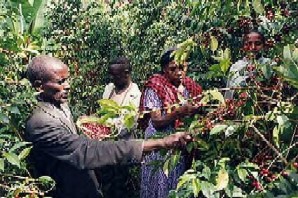
World boutique Coffee Manor beans: Yega Snow Flavor (part two) Wild Flavor in Ethiopia
[product name]: Ethiopia Ethiopia Yirgacheffe [quality rating]: WP Grade 2 [baking]: recommended moderate baking (Medium Roast or City Roast) [grade]: excellent [granule]: ★ full [acidity]: ★★★★ slightly sour, dark chocolate aftertaste [balance]: ★★★★ is very stable

Is Sidamo Yega Sheffield? what's the relationship between Yega Chefe and Sidamo?
Professional coffee knowledge exchange more coffee bean information please follow the coffee workshop (Wechat official account cafe_style) Qianjie Coffee-A brief introduction to the relationship between Yegashifi and Sidamo Ethiopia has unique natural conditions suitable for growing all imaginable varieties of coffee. A large amount of coffee production (95%, 2011 data) is done by small shareholders. Ethiopia
Honduran coffee beans Honduran coffee taste
Civet coffee (Kopi Luwak) is a recently invented coffee, produced in Indonesia, coffee beans are one of the civets' food range, but the coffee beans cannot be completely digested by the digestive system. The coffee beans are fermented in the civets' intestines and stomach and excreted by the feces. The locals take out the coffee beans in the civet feces and then do the processing, that is, the so-called Kopi Luwak, the taste of this coffee.
The price of Yega Chefe Coffee
Civet coffee (Kopi Luwak) is a recently invented coffee, produced in Indonesia, coffee beans are one of the civets' food range, but the coffee beans cannot be completely digested by the digestive system. The coffee beans are fermented in the civets' intestines and stomach and excreted by the feces. The locals take out the coffee beans in the civet feces and then do the processing, that is, the so-called Kopi Luwak, the taste of this coffee.

Yemeni mocha coffee with spicy and unique flavor
In Yemen, coffee beans have been treated by sun-drying, so some people think that Yemeni mocha coffee will have a fishy smell. More interestingly, the dry climate in Yemen makes some coffee fruits become very dry and hard before they are picked, so it becomes natural to remove the peel and pulp of coffee by sun-drying. Yemeni coffee farms all have homemade stone mills.
Brief introduction of Sidamo Coffee Bean Sidamo Coffee Flavor
Civet coffee (Kopi Luwak) is a recently invented coffee, produced in Indonesia, coffee beans are one of the civets' food range, but the coffee beans cannot be completely digested by the digestive system. The coffee beans are fermented in the civets' intestines and stomach and excreted by the feces. The locals take out the coffee beans in the civet feces and then do the processing, that is, the so-called Kopi Luwak, the taste of this coffee.

Introduction to the characteristics and flavor of Yega Chefe Coffee
Most of the refining methods of Yirgacheffe are water washing (washed), which is fermented and shelled in the washing tank for about 72 hours and dried directly outside the plant. After the raw beans are manually selected and qualified by the Ethiopian Coffee Cocoa Management Agency, they are traded and exported through competitive bidding. Its annual output is about 225000 bags (60kg per bag).

Introduction to the characteristics, varieties, flavors and manor producing areas of Obiya Jima coffee beans exposed to the sun
The characteristic species of dried Obijima coffee beans, varieties and flavor manor producing areas introduce that Ethiopia's Sidamo is a type of single origin, growing in Arabica coffee in Ethiopia's Sidamo province. Like coffee in most African countries, Ethiopian Sidamo is characterized by small gray beans, but characterized by its rich, spicy, wine or chocolate-like taste and floral aroma.
Exquisite Sidamo Coffee Taste Coffee characteristics of Sidamo Coffee Sidamo Ethiopia
Civet coffee (Kopi Luwak) is a recently invented coffee, produced in Indonesia, coffee beans are one of the civets' food range, but the coffee beans cannot be completely digested by the digestive system. The coffee beans are fermented in the civets' intestines and stomach and excreted by the feces. The locals take out the coffee beans in the civet feces and then do the processing, that is, the so-called Kopi Luwak, the taste of this coffee.

Characteristics of Flavor and Taste of Coffee beans in Ethiopia
Characteristics of Ethiopian Coffee Bean Flavor Manor treatment Ethiopia Sidamo is a type of single origin, growing in Arabica coffee in Sidamo province, Ethiopia. Like coffee in most African countries, Ethiopian Sidamo is characterized by small gray beans, but characterized by its rich, spicy, wine or chocolate-like taste and floral aroma. In all Cedars
The taste of boutique Yega Chefe Coffee the flavor of Yega Chevy Coffee
Civet coffee (Kopi Luwak) is a recently invented coffee, produced in Indonesia, coffee beans are one of the civets' food range, but the coffee beans cannot be completely digested by the digestive system. The coffee beans are fermented in the civets' intestines and stomach and excreted by the feces. The locals take out the coffee beans in the civet feces and then do the processing, that is, the so-called Kopi Luwak, the taste of this coffee.

Introduction of grinding degree production area of Ethiopian coffee varieties by taste and flavor description method
Ethiopian coffee beans are new coffee beans with high water content, so they need to be roasted a little deeper. They are roasted over low heat to the city to bake city, the surface is slightly oiled, and the beans are brown. After baking, Gemma feels crisp and loose after grinding, and it takes a long time to finish the last point of grinding. It may be that the beans are light and not easy to get down. The dry aroma of Gemma coffee powder:

What's the difference between coffee from the Red Cherry Project and coffee beans from the non-Red Cherry Project?
There are mainly eight major producing areas of Ethiopian coffee, namely: Lekempti, Limu, Illubabor, Djimmah, Harar, Teppi/Bebeka, Sidamo, Yirgacheffe. Yega Xuefei is a small town in Ethiopia, 1700-2100 meters above sea level. It is one of the highest coffee producing areas in the world. It is also a boutique coffee in Ethiopia.

Yega Snow Coffee Flavor Adoto introduces the characteristics of Yejia Chefe Coffee
Today, Ethiopia is an important coffee producer, with about 12 million people engaged in coffee production and a major exporter of Arabica coffee beans in Africa. The high-quality coffee here is of excellent quality and is worth looking for. A variety of coffee cultivation methods can be found in Ethiopia: from wild coffee forests and semi-developed land